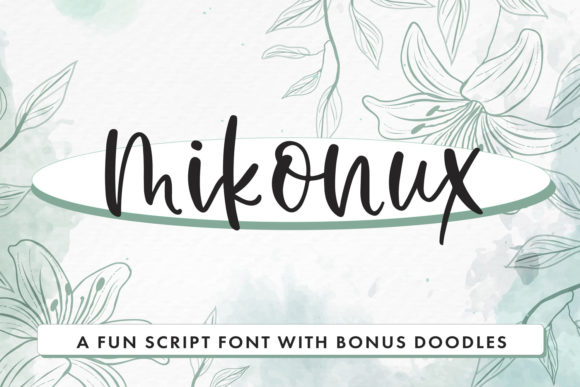
Mikonux a Fun Script with Doodles: A Handwritten Font with Casual Charm
Mikonux a Fun Script with Doodles is a handwritten font that stands out for its unique blend of artistic flair and readability. Designed to bring a sense of warmth and personality to text, this font is carefully crafted to appeal to a wide range of users—from designers and marketers to educators and content creators. Its casual charm makes it appear down-to-earth, while its versatility ensures it can be used in various contexts without losing its visual appeal.
What sets Mikonux apart from other script fonts is its integration of doodles and playful elements. These subtle additions add character to the text, making it feel more engaging and personal. Whether you're creating social media posts, branding materials, or digital illustrations, Mikonux offers a fresh take on typography that can elevate your design work.
Key Features of Mikonux a Fun Script with Doodles
The design of Mikonux a Fun Script with Doodles focuses on simplicity and expressiveness. Each letter is handcrafted to mimic natural handwriting, which gives the font a friendly and approachable look. This makes it particularly well-suited for projects that aim to convey a sense of authenticity or creativity.
One of the standout features of this font is its ability to work well on busy backgrounds. Unlike many script fonts that can become difficult to read against complex or colorful visuals, Mikonux maintains clarity and legibility even in challenging environments. This versatility makes it an excellent choice for use in both digital and print formats.
Another notable aspect of Mikonux is its compatibility with a variety of design tools. It supports common file formats such as OTF and TTF, ensuring that it can be easily integrated into graphic design software like Adobe Illustrator, Photoshop, and InDesign. This accessibility enhances its usability across different platforms and workflows.
Comparing Mikonux with Similar Fonts
When considering alternatives to Mikonux, it's important to evaluate how each font aligns with specific design goals. While there are several popular script fonts available, each has its own set of characteristics that may be more or less suitable depending on the project at hand.
Fonts like Brush Script MT and Lobster are often used for similar purposes, but they tend to have a more formal or stylized appearance. Mikonux, on the other hand, offers a more relaxed and organic feel, which can be particularly effective for content that aims to feel personal or conversational.
In comparison to more decorative fonts like Gloria Hallelujah, Mikonux strikes a balance between playfulness and professionalism. While Gloria Hallelujah is ideal for creative and artistic projects, Mikonux’s cleaner lines and consistent stroke widths make it better suited for a wider range of applications, including headlines, logos, and body text.
Strengths and Tradeoffs
The primary strength of Mikonux lies in its readability and adaptability. Its clean design ensures that it remains legible even when used in smaller sizes or on intricate backgrounds. This makes it a reliable choice for a variety of design tasks, from website headers to mobile app interfaces.
However, one potential tradeoff of using Mikonux is that its casual style may not be appropriate for all professional settings. In situations where a more formal or traditional font is required, Mikonux might not be the best option. Additionally, because it incorporates doodles, some users may find it less suitable for highly technical or academic content where a more neutral font is preferred.
Best-Fit Situations for Mikonux
Mikonux a Fun Script with Doodles shines in scenarios where a touch of personality and creativity is desired. For instance, it works exceptionally well for branding materials that aim to create a warm and inviting atmosphere. Social media content, such as Instagram posts or Facebook banners, can benefit greatly from the font’s playful aesthetic.
Another ideal use case for Mikonux is in educational materials aimed at younger audiences. The font’s casual and approachable style can help make learning materials feel more engaging and relatable. Similarly, it can be used in marketing campaigns targeting niche markets that value individuality and self-expression.
For those working in the creative industry, Mikonux can serve as a versatile tool for adding visual interest to designs without compromising on readability. Its compatibility with various design software and file formats also makes it a practical choice for professionals who need to work across multiple platforms.
When to Consider Alternatives
While Mikonux is a strong option for many design needs, there are situations where other fonts may be more appropriate. For example, if a project requires a high level of formality or professionalism, a serif font like Times New Roman or Georgia might be a better fit. These fonts are known for their readability and traditional appearance, which can be essential in legal documents, academic papers, or corporate communications.
Similarly, for projects that require a more dramatic or stylized look, a font like Great Vibes could be a compelling alternative. Great Vibes has a more ornate and elegant feel, which can be ideal for wedding invitations or luxury brand identities. However, this comes at the cost of reduced readability, especially in smaller sizes or on complex backgrounds.
If a project involves a lot of text, such as long-form articles or reports, a sans-serif font like Arial or Helvetica would be more suitable. These fonts are designed for maximum legibility and are widely used in print and digital media due to their clean and modern appearance.
Realistic Examples and Practical Comparisons
To illustrate how Mikonux compares to other fonts in real-world applications, consider the following examples:
- Social Media Posts: Mikonux adds a friendly and approachable tone to captions and headlines, making them more engaging for followers. In contrast, a font like Comic Sans MS might feel too informal for professional accounts, while a font like Baskerville could come off as too serious for a fun or casual brand voice.
- Logo Design: Mikonux’s casual charm can help create a memorable and distinctive logo for a boutique or lifestyle brand. However, for a law firm or financial institution, a more traditional and trustworthy font would likely be more appropriate.
- Print Materials: Mikonux performs well on printed materials such as flyers and brochures, especially when paired with simple layouts. In comparison, fonts with excessive embellishments may not translate as well to print, potentially leading to issues with ink bleed or poor resolution.
These examples highlight how the choice of font can significantly impact the overall effectiveness of a design. By understanding the strengths and limitations of each font, designers can make more informed decisions that align with their project goals.
Ultimately, Mikonux a Fun Script with Doodles is a valuable addition to any designer’s toolkit. Its unique combination of readability, versatility, and visual appeal makes it a great choice for a wide range of applications. Whether you're looking to add a touch of personality to your next project or seeking a font that can adapt to different design challenges, Mikonux offers a compelling solution that is both functional and aesthetically pleasing.